HERPETILE
The Natural Home of Reptiles and Amphibians
HERPETILE is an interactive digital magazine that explores all things in the reptile and amphibian community.
We aim to bring a better understanding and renewed love for our slippery, scaley and scute-driven creatures. They are, naturally, silent stoic beings and so we have a duty to give them, their prey and any invertebrate they cohabit with in our care, a voice that resonates towards their survival.
Here, a creative twist to husbandry, conservation and research takes a slithering advancement.
Issue 2
Rain and Animal Sounds
There’s something captivating about the way we care for herpetiles (reptiles and amphibians) in a personal and professional capacity.
We can spend hours just sitting, staring at their "mostly"naturalistic habitat whilst they conduct their wild behaviour. This is why building a perfectly balanced home, away from home, should be our top priority.
We start proceedings with a fun, location-based game to test your knowledge of species from South-East Asia and Australasia.
Our next port-of-call is traversing to the lush-vegetation of Réunion Island, near Mauritius. Our article on a study of the Manapany day gecko phelsuma inexpectata highlights the need to conserve endangered species.
Then we uncover another micro-habitat series entry that delves into the importance of natural husbandry. Our feature on Why Go Bioactive? takes readers through the different choices that a herpetile carer can decide on with stunning ex-situ enclosures.
But this isn’t just about aesthetics, it’s forming good animal welfare as we cater for their health and promote more natural behaviours through better surroundings. Those two aspects are at the core of everything we practice.
Throughout this issue, you’ll find our signature themes of key information with eye-catching visuals. Content showcasing the beauty and fascination for each animal and home.
At one point or another, any non-native herpetile, in any country in the world, has had a past generation that would've been caught in the wild. Were those first generations 'ethically sourced'? Is that phrase a paradox in the pet trade?
I don't have the answers and we don't expect you, the reader, too either. That's OK but it's worth keeping those questions in mind to decipher the purpose of our actions in adopting, selling and caring for them.
That may seem like a lot to digest before continuing to read on. Let's put a pin in it and address those questions in a later issue.
In the meantime, we hope you enjoy this publication and find enlightenment in your herpetile husbandry practices.
Thanks for reading!
Yours Sincerely,
Scott Lockhart
Editor-in-Chief
On Location:
Guess The Herpetile
Which highly venemous snake is endemic to the Okinawa and Amami Islands in Japan? (scroll to reveal the answer)
Okinawa Habu Pit Viper!(Protobothrops flavoviridis)
Fun Fact: Unlike other Pit Vipers, which lay live babies, this one lays eggs (oviparous).
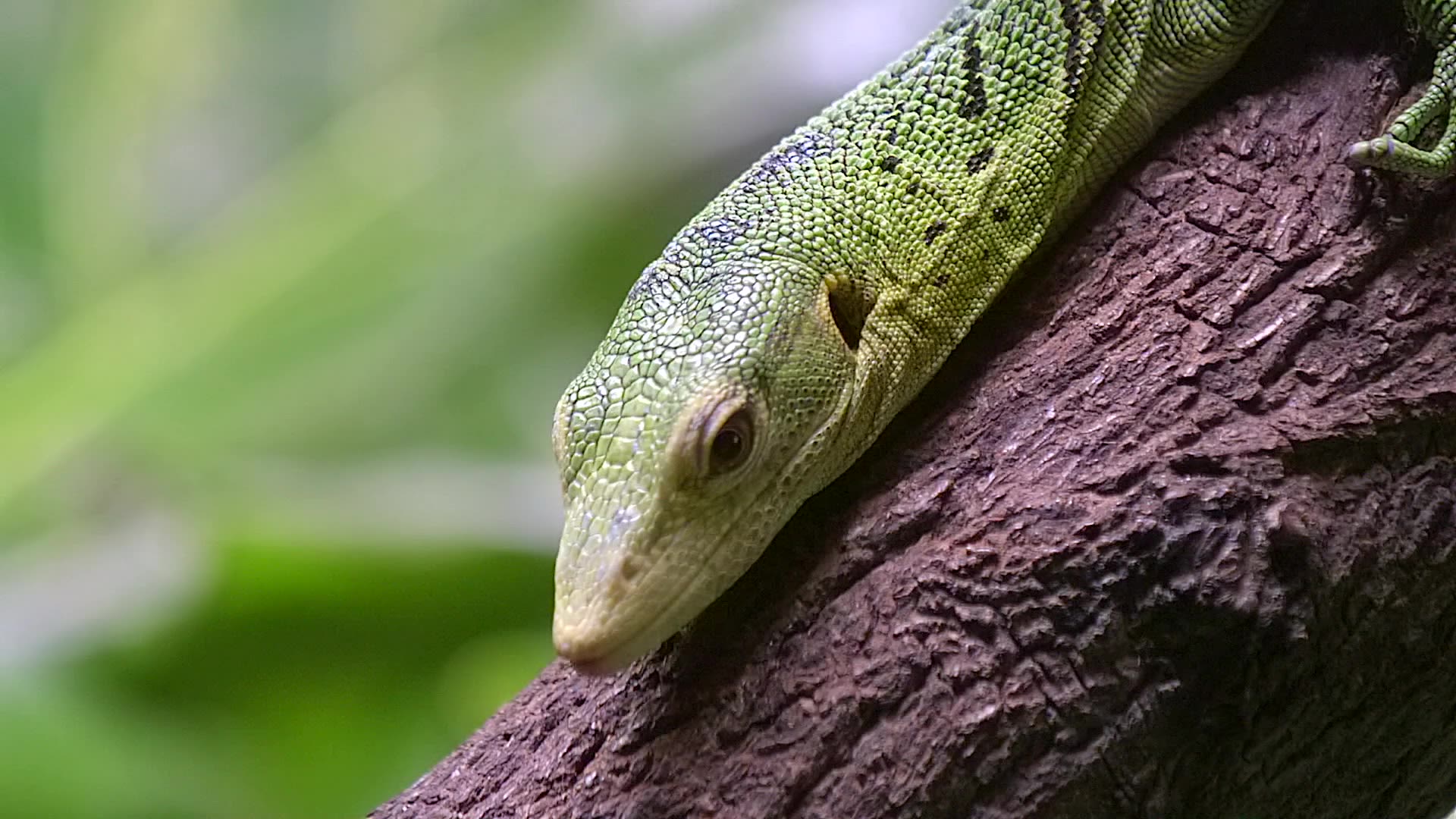
What is the name of the large lizard endemic to New Guinea? (scroll to uncover the answer)
The Emerald Tree Monitor! (Varanus prasinus)
Fun Fact: Tree monitors have a prehensile fifth limb (their tail) and cannot drop this as they need it for grasping onto branches to climb and even hang upside down.
What colourful, arboreal and endemic snake would you find in the Philippines? (scroll to see the answer)
The Philippine Pit Viper ! (rimeresurus flavomaculatus)
Fun Fact: They have heat sensors between their eyes and nostrils to act as night goggles for hunting.
What species is the threatened, nocturnal, cave-dwelling lizard that is endemic to Thailand? (scroll down to reveal the answer)
Golden-Belted Bent-Toed Gecko ! (Cyrtodactylus auribalteatus)
Fun Fact: Vulnerable to drastic habitat changes and so they are highly micro-endemic to caves in the heart of Thailand's Phitsanulok Province, specifically within the Thung Salaeng Luang National Park at Tham Phra, Wang Daeng and Tham Khun Takhan.
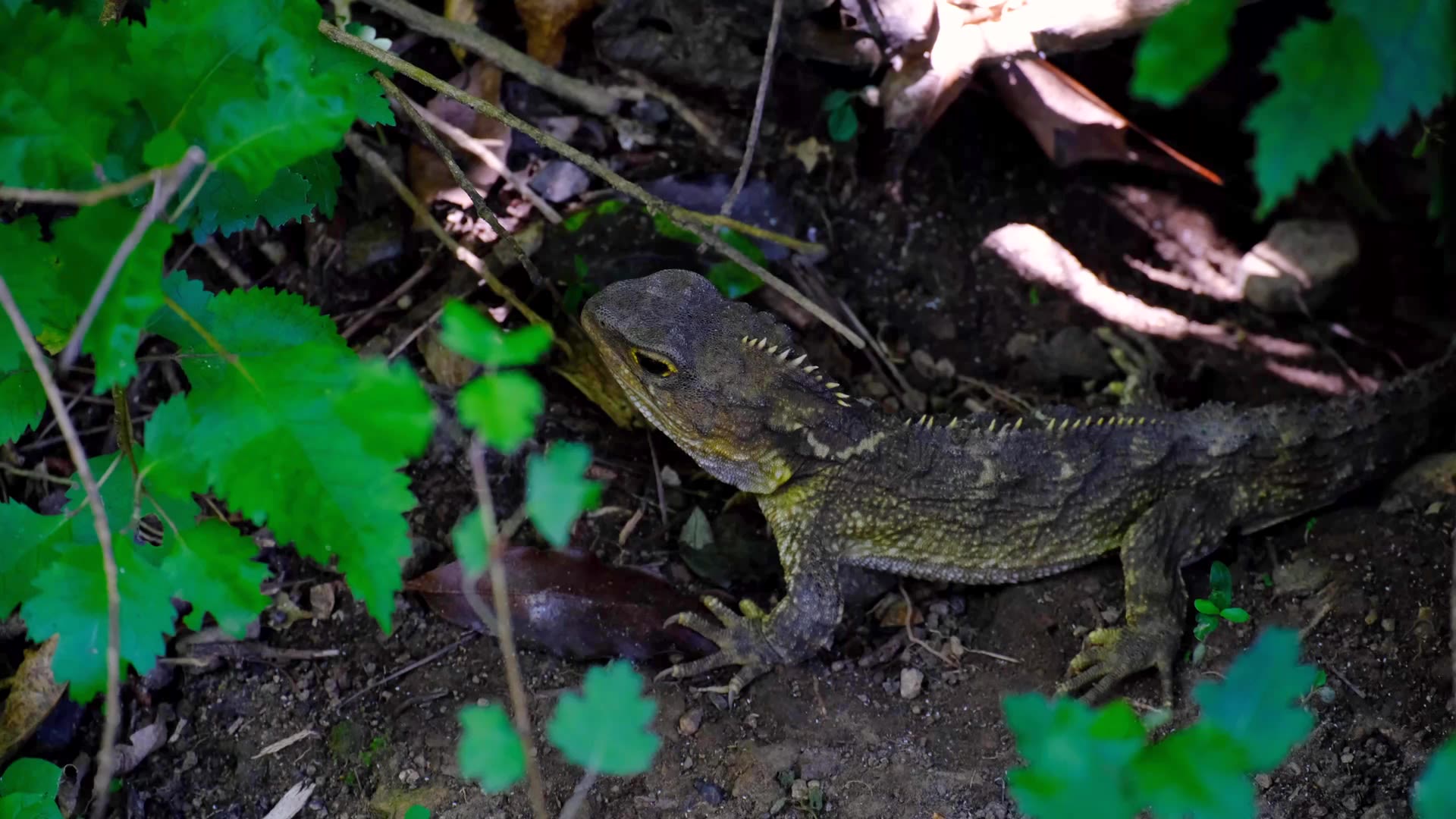
What is the name of the 'living fossil' that is the only surviving member of a species from the dinosaur age? (scroll down to reveal the answer)
Fun Fact: Last living lizard-like species of Rhynchocephalia. They were a diverse order around 244 million years ago but now only reside in New Zealand.
Glimmer Of Hope For Critically Endangered Species
A new study has formed a sexual maturity data set for the critically endangered Manapany day gecko phelsuma inexpectata
'Size at sexual maturity, sexual size dimorphism and new data on the breeding period of the threatened Phelsuma inexpectata' (Mickaël Sanchez, Alicia Bonanno, Margot Caubit & Johanna Clémencet, 2025)
This has never been done before as no precedent readings have ever been made in such a huge number.
The gecko is endemic to the isolated Rèunion Island, near Mauritius and is falling in numbers due to urbanisation and agriculture expansion. It has had a 45% decrease of distribution between 2008-2022.
Between the sexes, there is clarity:
"males are described as larger and more colourful than females (Sanchez et al., 2009), but no biometric data are available and the measurements of only four individuals have been previously published (see Mertens, 1966; Vinson & Vinson, 1969)."
Determining Sexual Maturity
It is determined through this study that different structural characteristics, such as age and sex, may be able to quash past miscalculations of sexual maturity age and body size numbers.
Snout-vent length and tail length were also measured to capture the sexual maturity of an individual. Males would be mature at 42.1mm SVL and females at 47mm SVL. Previously, studies were showing much smaller and vague SVL numbers which would delay breeding proceedings.
Seasonal Changes
The time of year is a prevalent factor of this study. Gravid Females were found to be holding eggs as early as May - July. Their usual production period would be August to November.
Breeding programmes, from a conservational stand-point, will be able to identify key
"distinctions between sexes and between immature and mature geckos".
Final Thoughts
There is still time to act based on the findings of this study. Knowing when these geckos are able to reproduce, as early in their life stage as possible, may be the difference in extinction and survival of the species.
Bibliography
- Mickaël Sanchez, Alicia Bonanno, Margot Caubit & Johanna Clémencet (2025) Size at sexual maturity, sexual size dimorphism and new data on the breeding period of the threatened Phelsuma inexpectata. Available from: https://www.thebhs.org/publications/the-herpetological-journal/volume-35-number-2-april-2025[Accessed 18 November 2025].
- Mickaël Sanchez, Alicia Bonanno, Margot Caubit & Johanna Clémencet (2025) Current distribution of Phelsuma inexpectata, a threatened Réunion Island endemic gecko Available from: https://www.cambridge.org/core/journals/oryx/article/current-distribution-of-phelsuma-inexpectata-a-threatened-reunion-island-endemic-gecko/A57D44AFDB40357C3496A00E938100F0[Accessed 18 November 2025].
- Mertens, R. (1966). Die nichtmadagassichen Arten und Unterarten der Geckonengattung Phelsuma. Senckenbergiana Biologica 47, 85–110. Vinson, J. & Vinson, J.-M. (1969). The saurian fauna of the Mascarene Islands. 1. A revision of the fauna. Mauritius Institute Bulletin 6, 203–320.
- Sanchez, M., Probst, J.-M. & Deso, G. (2009). Phelsuma inexpectata Mertens, 1966 (Squamata : Gekkonidae) sur l’île de La Réunion : écologie, répartition et menaces. Bulletin de la Société Herpétologique de France 132, 43–69
- Choeur Arthur 1,2, Clémencet Johanna 3, Le Corre Matthieu 1, Sanchez Mickaël (2022) Evidence of seasonal reproduction, laying site fidelity, and oviposition synchronicity in the critically endangered endemic Manapany Day Gecko (Phelsuma inexpectata) from Reunion Island (western Indian Ocean) Available From: https://archimer.ifremer.fr/doc/00822/93414/ [Accessed 18 March 2026].

Réunion Island Waterfall
Réunion Island Waterfall


Réunion Island mountain range
Réunion Island mountain range
Why Go Bioactive?
Investigation Into Different Setups For Herpetile Husbandry
By Scott Lockhart
Housing a herpetile in certain conditions will cause mild scoffing and attempted put-downs by certain individuals.
We want to put everything into perspective through experience and knowledge.
There are different strategies by carers, based on their own experience, budget or knowledge. It doesn't mean that one size fits all and mistakes can/will be made but there is always a solution. That is the beauty of herpetile husbandry.
A quick look at the different types of living conditions will hopefully clear any confusing issues surrounding each enclosure.
Different Capsules Of Life
The most minimalist-type setup that most people have witnessed, in a control setting, is the RUB habitat. It stands for Really Useful Box.
We, at Journalistic Echo News, have used containers to act as temporary housing for different critters with forever home issues, so it is not uncommon.
Plastic tubs are a cheap alternative to a glass or wooden tank/vivarium. They come in various sizes that can fit into rack systems.
"The typical housing system used for pythons is the so-called rack system. It was first designed in North America around 1992 [14, 15]. A rack system is a shelving system with individual bins arranged as drawers. In some models, the bins have individual lids, in other models, they are open on the top and close flush with the upper shelf board."

Selling snakes in a rack system
Selling snakes in a rack system

Rack System
Rack System


Contents are basic: paper towel, aquarium foam or your local newspaper as the substrate, a water bowl and a hide.
On one side, you can attach a heat mat to keep them warm and UVB lighting, species dependent, on top to mimic sunlight and synthesis of Vitamin D3 to aid absorption of calcium.
Good news - no hardscape or plants are required. Maintenance is easy, therefore.
Substrate change, water changes and feeding are all that is needed on a daily basis.
Having many baby snakes from breeding projects would be housed in RUBs. Quantity over quality.

Really Useful Box
Really Useful Box
A study in 2021 by Tina Hollandt, Markus Baur and Anna-Caroline Wöhr: 'Animal-appropriate housing of ball pythons (Python regius)—Behavior-based evaluation of two types of housing systems' found interesting results.
A comparison between a rack system and terrarium settings were made of 35 ball pythons over 5 days.
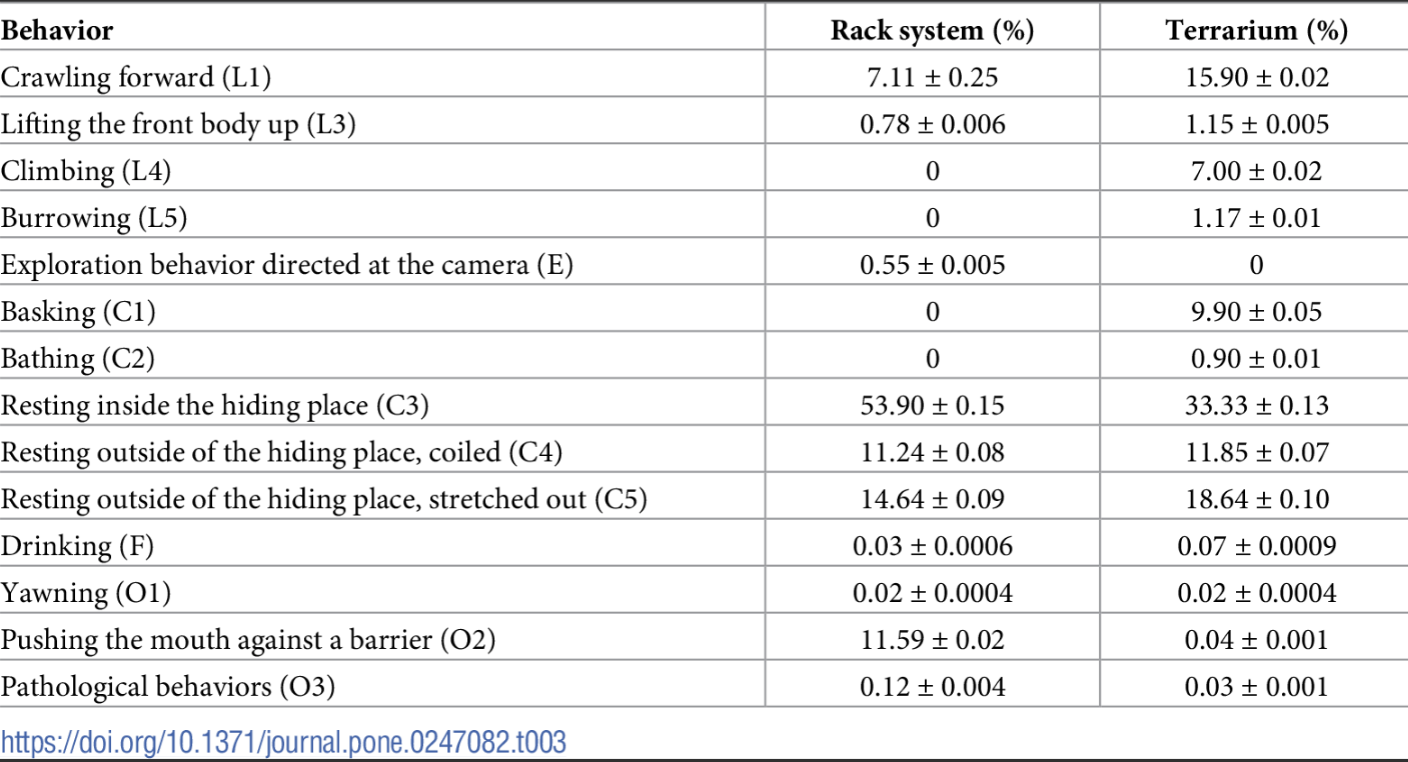
At a glance, the more negative behaviours were exhibited through the rack system. See the result table on the scroll down image.
Natural Minimalist
Another route to head down is a vivarium or tank. It can be made of glass, wood, mesh or plastic and also come in a variety of sizes.
These canvasses are made specifically for herpetiles from reputable brands, such as Zoo Med Laboratories or ReptiZoo.
Features, that include pre-made wire and ventilation holes, will cater for any technological additions.

Result Table
Result Table
There can be a slight increase of supplies for this setting: substrate, lighting/heating, hardscape and fake plants would be all the materials you need as a starter kit.
Naturalistic surroundings are becoming more obvious here. It has everything you need and would be quick to start up.
You still have to make the same maintenance as RUBs with a few extra touches of care for the added decorations.
Replicating the rainforest, for example, can be done in placing cork branches propped up or sticking fake plants by suction cups on the glass wall of a tank.
A herpetile would be very happy to interact with the added decor and hardscape. Enrichment is a huge win-win in this world.
A study in 2023 by Damian Zieliński: 'The Effect of Enrichment on Leopard Geckos (Eublepharis macularius) Housed in Two Different Maintenance Systems (Rack System vs. Terrarium)' said:

Natural Minimalist Vivarium
Natural Minimalist Vivarium

Minimalist Vivarium
Minimalist Vivarium

Minimalist Vivarium
Minimalist Vivarium
An enriched environment (e.g., complex biotope terrarium) improves reptiles’ cognitive performance and significantly improves their well-being [16,29]. The complexity of living conditions, including the way of offering food (dispersed release of food insects rather than in a bowl or feeder), increases the difficulty of locating and catching prey.
Bioactive Surroundings
Next advancement in your herpetile welfare would be to go bioactive.
Simply put, a bioactive enclosure is a constant recycling of nutrients from substrate to herptile and back.
A biological community of interacting organisms and their physical environment.
To create something this complex, you would need a bigger budget and plenty of research for each living-and-breathing layer.
Everything, from custom backgrounds made out of expanding foam, silicone and coco-coir substrate to glueing over-hanging branches with live-moss or live-plants attached, makes a dream project of creativity.
If a herpetile species requires a specific body of water to swim in then a water filter, filter foam, plastic sheets and some hardscape rocks would be the start of a scenic waterfall feature.
Again, it forces the idea of using human-made tools to make something look natural and passes on nutrients from one to the next.
A false-bottom is a solid foundation that starts the process of natural movement of resources.
Small clay balls and a permeable membrane, like window screen, would allow the passing of water from one layer to the next and prevent soil stagnation.
Species-orientated substrate on top of the drainage layer complements growth. It has to allow humid-loving plants to spread their roots.
Desert species need a much simpler play-sand/coco-fibre layer that doesn't need moisture but can still hold plants such as cacti or succulents and small beasties like springtails.
Adding leaf-litter and moss/plants to the substrate will allow aeration and nutrient cycling. Mixing in sphagnum moss and leaves into the substrate will create pockets of air.
Micro-climates will also occur as each mixed segment will hold different temperatures and humidities for all your inhabitants to thrive upon.
Invertebrates would be the next in line as major players in a bioactive setting. These can be in the form of isopods, springtails and millipedes. They will break down organic and waste matter to allow it to be passed into the soil for plants to feed on.
Remember to feed your small creepers with additional vegetables or fruits to give them some variety.


"Environmental enrichments should be suitable for the species for which they will be used. The use of enrichment items not only improves the welfare of animals in captivity, but also affects specific aspects related to breeding (depending on its purpose), including reproductive success, foraging success, body condition, chances for successful reintroduction, or living in good physical and mental condition as a pet animal [14,45]"
Damian Zieliński
2023
Who Comes Up Trumps?
Jessica May Hornby and Joanna Hedley state, in their 'Reptile Husbandry: The Basics' article:
"no perfect enclosure exists, as it is impossible to recreate the identical environment that reptiles inhabit in the wild."
"Understanding these different components will allow veterinary teams to advise owners appropriately, improving animal welfare and reducing presentations of preventable diseases in clinics."
Each set-up has their own uses, positives and negatives. If we allow the animal to be stressed and unhealthy then that should be the main issue, irrespective of the enclosure.
However, if the setting is the direct cause of said problems then it would be worth re-thinking their home situation.
HERPETILE
Subscribe now for updates of future issues and exclusive access to the world where herpetile husbandry, welfare and research thrives.
HERPETILE is a cutting-edge interactive platform for all things reptile and amphibian in the global sphere. Shedding new perspectives of love for these animals. Tame our initial apprehension of these misunderstood creatures. Provide good husbandry that they deserve. All backed up by croaking calls to the experts, to get their vital insight, our experience of animal care and our extensive research into each subject area.
Editor-in-Chief: Scott Lockhart
Contributing writers: Scott Lockhart
Art Director: Scott Lockhart
 Built with Shorthand